


The Little Feature That Did: Spotify Wrapped

How a Simple Act of Summarized Data Catapulted Spotify Wrapped into the Pop Culture Phenomenon by Making Marketing Surveillance Fun

Picture this: It’s 2015. You’re scrolling through social media trying to decide if the dress is blue or gold, you have a Spotify playlist on with songs from Drake’s Hotline Bling fills your room. You’re trying to figure out what you and your friends are going to watch tonight: Is the MTV VMAs or Game of Thrones….or perhaps a platonic Netflix and Chill by binge-ing a new series on Netflix? Whatever it is, there was no way of getting around how influential 2015 was for pop culture. From the emergence of the #MeToo movement, to Patricia Arquette’s Oscar acceptance speech highlighting the gender pay gap, to Adele saying Hello after a four-year hiatus, to the Year of the Squad complete with Kendall Jenner, Gigi Hadid, and Taylor’s famous squad, 2015 marked a pivotal year in pop culture – with one notable new addition: Spotify Wrapped.
With a year marked with political, musical, and societal changes, Spotify went from a Swedish music streaming app in a sea of competition all vying for the top spot as the go-to music streaming app to a trailblazer with the launch of Spotify Wrapped. But what started as a simple email marketing campaign quickly turned into the viral pop culture phenomenon that other apps tried to emulate has now turned into a data privacy debate. Before there was Spotify Wrapped, there was Year in Music. So, let’s dive into how it all started, where it’s going, and the controversy surrounding this viral pop culture tradition.
The little email that did -
Launched in 2015 as an email campaign under the working title Year in Music, little did Spotify – or anyone really – know that this little email marketing campaign would turn into a viral pop cultural phenomenon, catapulting them straight into the stratosphere as top dog of the music streaming game. But that was a few years away. The email all Spotify users received was nothing in comparison to what Wrapped has evolved to become over the past decade.
But before we dive into the evolution of Spotify Wrapped, a quick recap of the popularity of email marketing back in the mid-2010s as the way to market to a consumer base. And it wasn’t just the way to market, it was the ultimate way -- and most popular method -- to market. Due to its strong ROI and strategic importance in spite of the rise of social media, many businesses prioritized email campaigns as the best way to market their reach to new and existing customers. All thanks to Gmail (and other email apps) becoming standard on mobile devices, with iPhone and Gmail dominating the marketing with their notification feature and making emails what social media notifications are today.
On a Sunday back in December 2015, the inaugural Year in Music email dropped in the inboxes of all Spotify users. Back then, all the email consisted of was just that – a simple email; nothing more than a simple summary of the customer’s listening habits from the year, neatly wrapped (pun intended) in a data-driven marketing campaign that combined user data with creative storytelling. Or, at least, that’s how Spotify describes their viral pop culture tradition. In a sense, what you got back then is similar to what you get now: Data – raw, raw data. Wrapped’s three-part global campaign consists of the overall top charts, fans’ personal stats and artists’ stats, began to attract a larger consumer base with roughly 5 million unique users in its inaugural run.

Fast forward to the following year, 2016. And this time around, it wasn’t just an email, and it wasn’t called Year in Music anymore – it was now an immersive experience whenever you opened the Spotify web browser. And instead of it dropping on a Sunday at the beginning of December, it was now on a Wednesday sometime in mid-December. It also rebranded itself to what we now know it as Spotify Wrapped. Even more than that, this time around, it wasn’t just a summary of the user’s top artists and other features found on Year in Music, the main feature that year was a curated playlist consisting of the user’s most-listened-to songs of the year – a format that’s still continued today.
In 2019, yet another evolution of Wrapped appeared – this time, Wrapped wasn’t restricted to their web browser, it was now on their app. This simple yet impactful decision not only made it easier for users to discover and share their yearly recap, it also increased its reach to its consumer base now that it wasn’t restricted to a web browser, which was in decline due to the rise of apps.

Wrapped’s evolution continued yet again in 2021 with the integration of social features that allowed Wrapped’s format to extend beyond its static lists of the app by introducing features like Audio Aura that created a colourful “aura” around your Listening Personality.

Another feature new to Wrapped that year was Wrapped Blend, which sounds more like an off-brand non-corporate coffeehouse, or a type of over-priced smoothie at Erewhon than a feature found on Spotify Wrapped. This new feature was a collaborative playlist that allows users to combine their annual listening habits with their friends to create a shared playlist based on their combined top songs from the year – a feature that’s been present on Wrapped. This feature was introduced alongside short video messages from users’ favourite artists. All these new additions were designed to enhance self-expression and social sharing. And as if all these changes weren’t enough, Wrapped 2023 brought the inclusion of interactive games into the mix which saw an impressive reach of 227 million users, a record for Spotify.

So, if all the changes Wrapped has made over the years hasn’t confused you enough, let’s talk about the dates Spotify uses to compile all this data. We’ve all seen the memes online about December being the month of music purgatory, a lawless time when you can seemingly stream anything you want without it affecting your Wrapped algorithm for following year. Many users have attempted to game the system by manipulating their plays based on dates, and many have failed. That’s because the true dates Spotify uses to pull their data for Wrapped is closely guarded – guarded heavier than the Louvre’s wifi password.

In the past, Spotify confirmed the start date for their data collection does, in fact, start in the beginning of January. “We start at the beginning of January with all of your listening that begins right then at the beginning of the year,” says Molly Holder, Senior Director of Product for Personalization at Spotify. And in 2024, Spotify did clarify their data collection doesn’t end on October 31st -- as some online rumors have long speculated -- with the end date of data collection going “all the way through…up until a few weeks before we launch the Wrapped product,” according to Holder. December is a great month to omit from their data compilation, given the numerous holiday celebrations that occur throughout the month, which could likely have an unwelcomed effect on the Wrapped’s outcomes. Any parents with small children can most likely agree with this, with children’s music streamed on app already throwing off their yearly Wrapped results.

Now that we’ve dispelled any speculation surrounding the dates of Wrapped’s data collection, what about the day Wrapped drops? We already mentioned the inaugural Wrapped was the outlier, having dropped on a Sunday back in 2015 (December 6th, to be exact), and we’ve already discussed in 2016 and 2017 the release date was on a Wednesday (December 14th and December 13th, respectively). But what about 2018 and 2019? Well, Spotify kept us on our toes and moved the day once again. This time, it was moved to a Thursday (December 6th and December 5th, respectively). And just when you thought there was some consistency to this, enter 2020. Not only was 2020 a chaotic year for many, Wrapped dropped on a Tuesday (December 1st). In the preceding three years (2021-2024) making yet one more change, this time back to its roots on a Wednesday (December 1st, November 30th, November 29th, and December 4th respectively).
So now that we’ve gone over the timeline of the dates Wrapped has dropped, have you picked up what we’ve thrown down with the exact dates of release? If you haven’t, I’m not sure if we can help you. If you have, congratulations, you’ve picked up on the pattern that Wrapped typically drops around the very end of November or early part of December. And you’ve probably picked up on the fact that Wrapped hasn’t dropped for 2025….yet! At the time of writing this on December 1st, the most likely date for Wrapped 2025 to drop is Wednesday, December 3rd. But don’t place your bets on Kalshi just yet. Spotify has been mum on this year’s Wrapped release date. “It’s almost like election night,” Louisa Ferguson, Global Head of Marketing Experience for Spotify.
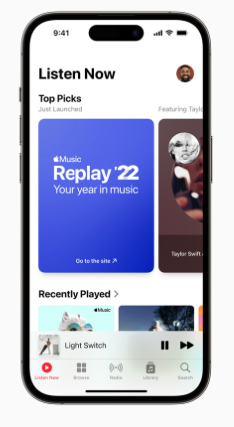
With competitors like Apple Music, JetBlue and Audible all attempting to create their own version of Wrapped with little to no success, it’s no wonder the exact release date is kept secret. This secret along with their relevancy of Wrapped all “…started as a marketing campaign without any type of digital component,” says Ferguson. And that digital component Ferguson is referring to is something we’ll dive deeper into in a moment, but first, let’s take a look at where Wrapped is now.
Where it’s at now -
Alright, so we’ve looked at how Spotify Wrapped has evolved over the past decade, but what we haven’t looked at is what it is – like, really is. Having morphed from a simple email to the immersive, shareable experience it is today, Wrapped has become a cultural tradition that not only has permeated into our collective psyches, it also embodies the latest technologies. Enter AI to the chat.
In 2024’s Wrapped edition, we saw yet another first: The integration of AI – or Artificial Intelligence for some of you folk lucky enough to be out of the know on this – by including a personalized AI podcast, an AI DJ, and an AI Playlist.
With last year’s Ten Year Anniversary, the 2024 Wrapped incorporated AI and Personalization into the mix that appeared as “Your Music Evolution”, a data story that broke users’ listening history into three phases consisting of descriptive titles and connected artists. This was Spotify’s most ambitious evolution to date. Other new features included a revamped visual design in bold, looping animations which was inspired by the “constant reinvention” in music, AI-generated “Wrapped AI Podcast”, a short audio recap narrated by AI hosts using Google’s NotebookLM as well as the integration of its AI DJ / AI Playlist tools. Another first for Spotify was the inclusion of Wrapped Summaries, created specifically for content creators, consisting of personalized Wrapped hubs made for artists, songwriters, podcasters and audiobook authors geared to deepening its engagement with the creator community. And just like any trailblazing entity that launches itself into the stratosphere of pop culture, it comes without its criticisms.

How Wrapped works -
Before we jump right into the criticisms surrounding Spotify and Wrapped, let’s quickly discuss how Wrapped actually works. Any time a user plays, skips, searches or saves a song, Spotify logs that event, and that event compounds into queries that feed into a central data warehouse, where Spotify data engineers aggregate and model all the data to compute it into individualized bite-sized metrics. From there, Spotify sprinkles its magic -- aka human curation -- with Spotify data engineers identifying rising tracks and artists from the qualitative insights and off-platform signals.
And exactly what are those “off-platform signals”? According to Spotify, the off-platform signals they use refer to any sources that exists outside of their app or website, such as monitoring social media trends, to identify new music and cultural trends, trending tracks and artists. Moreover, Spotify contends this creates the ultimate shareable experience, which works to promote their reach further. For instance, anytime you share Wrapped on your social media pages. And although this all sounds idyllic to the average person, it does come with its alter ego: AI.

It’s no surprise Wrapped is powered by vast amounts of user data collected throughout the year as well as machine learning. The editorial insights Spotify boasts is behind the success of their viral yearly tradition all feed back into the recommendation system within their algorithms. This delicately balances the familiar with discovery by noting your behavior while on their platform to learn more about you and your tastes. And this delicate interplay between the algorithms combined with the human curation lends Wrapped to appear to feel personal and culturally relevant. The final component to the inner workings of Wrapped takes all the data and presents it to the user in a fun, friendly interface that allows it to be easily shared on their socials. Which all seems innocent and customer-centric enough. But is it really though?
Seemingly handing over your data to a large tech company does seem a bit insane when it’s framed that way. With the virality of the Wrapped campaign presenting user data in a fun, friendly manner that’s designed to influence its users to share them on social media, it’s no surprise Wrapped has become a marketing juggernaut for Spotify, delivering enormous engagement without requiring any additional work from the user. To illustrate Spotify’s reach, globally in 2024, Wrapped rolled out to 184 markets, supported by TikTok and Instagram due to their sharing integrations and voice commands (think “play top songs 2024”), which further fuelled the virality of Wrapped.
Criticisms –
In recent years, Spotify has been accused of “weaponizing’ their users to advertise them for free, which manufactures a real sense of FOMO (Fear of Missing Out) for people who don’t use Spotify as a means to drive them to become a Spotify user; thus, permitting them to participate in Wrapped. This impact is visible within Spotify’s metrics. According to their analytics report for Wrapped 2024, there was roughly 2.1 million social media mentions in the first 48 hours of dropping, over 400 million TikTok views within the first 72 hours, and roughly 10.5 million users who actively shared their Wrapped results. This all resulted in a 40% spike in engagement for Spotify during launch week. In this Attention Economy, that equals to massive engagement, marketing, and big money…for Spotify.
To draw a comparison to this, in 2020, Wrapped generated only 20% more Spotify app downloads. All this consistently drives brand awareness for Spotify, making Wrapped a “cultural report card” for its users and making it become the viral phenomenon that other brands have tried to emulate but cannot replicate. Even before Wrapped drops, millions of people are already talking about it. Take for instance, Wrapped 2024. By mid-November of that year, close to 2.2 million people were already talking about it. And by mid-December, Wrapped had dominated social conversations worldwide and was constantly trending with hashtags and memes. So, it goes to show the social force behind this marketing campaign that continues to drive Wrapped’s success.
But behind every marketing campaign there are criticisms. And one such critique of Wrapped is that it’s a culmination of a year-long tracking campaign packaged as fun to express one’s musical tastes. As TechRadar observes, Spotify “follows every stream” to collect an ever-growing cache of personal data, then presents it as an entertaining package, which amounts to nothing more than “marketing surveillance” rather than a marketing campaign. Digital rights advocates bluntly echo the same sentiment, referring to Wrapped as “market[ing] surveillance as fun”. And the research seem to back this critique.
Research indicates Spotify collects more than just the listening counts of its users by collecting data on user demographics -- such as gender, IP-based location, presumed nationality, and social class -- to build their detailed “taste profiles”. Spotify then shares this data with advertisers – a claim Spotify doesn’t deny nor confirm but does state on the privacy page of their site that it does share your data with third parties. Despite that, Spotify does mention on their site it does allow its users to opt out of most of their information shared with third parties. Spotify claims it has to share data with third parties as it’s a core aspect of their business model.

Look, we could talk all about how subscriptions aren’t a lucrative business mode - especially when it’s been documented countless times the low payouts Spotify provides its artists, unless you’re Taylor Swift, but that’s a conversation for another time. Despite Spotify disclosing the reasons behind sharing your data with third parties, it was enough for European regulators to fine Spotify €5.4 million in 2023, citing data transparency failures. In fact, privacy experts warn Wrapped’s free appeal comes at a cost to its users in the form of data sharing.
Data sharing aside, another critique of Spotify Wrapped has to do with the content itself. Some users and analysts who found Wrapped 2024 to be underwhelming despite the huge audience numbers it has amassed. This was largely attributed to the AI elements integrated in which created “micro-genre” labels that weren’t useful outside of the Spotify platform, with users claiming that listening to a pair of AI Hosts narrate the year felt “soul-destroying”. Furthermore, criticisms of Spotify arose after their choice of AI implementation post massive layoffs in 2024. This goes without mention the additional costs both financially and environmentally that AI-powered engines generate, which indicates a potential listener-backlash to AI-powered storytelling.
The mono-culture that Wrapped’s content has created serves to only reinforce the dominance of superstar artists, like Taylor Swift, while withholding support for indie or up-and-coming artists who also happen to share space on Spotify’s platform. The “most-streamed” charts have been glossed over, almost like a gentrified version of real issues that almost seem to paint an idealized version of the music industry while simultaneously ignoring artists’ struggles.

Conclusion –
So, we’ve discussed the evolution of Spotify Wrapped over the past decade from its humble email origins to the immersive, shareable -- in more ones than one would expect -- experience it is today, to the criticisms that lie within Wrapped that includes sharing your data with third-party advertisers to the behemoth mono-culture it’s created which seemingly glosses over the real-life struggles of the music industry. But suffice it to say, Wrapped has emerged as a textbook example of what data-driven marketing looks like in this digital age by harnessing millions of user data, gamifying it, and packaging it as a deeply personal, emotionally engaging experience designed to extend its reach through social media. This immersive marketing campaign has achieved what so many have strived to accomplish: Users freely and unwittingly offering up their data and freely promoting their brand en masse, potentially laying the foundation for what could arguably be the most successful marketing campaign of the 21st century.
Now, you’ll have to excuse me. I have to share my Wrapped 2025 results with my following.


Comments